
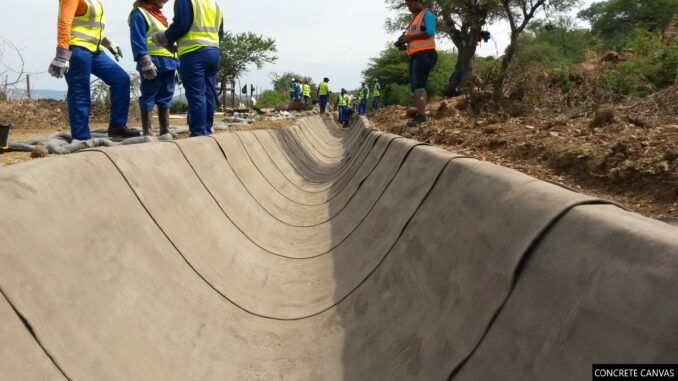

For irrigation networks, the available repair window is often set by water demand rather than the construction programme. These project examples show why installation speed and continuity of supply deserve equal attention.
.

What happens when a canal needs urgent work, but the people who rely on it cannot wait weeks for the water to return?
This is a familiar tension in irrigation. Engineers may identify seepage, erosion or a failed lining, yet the practical opportunity to intervene can be brief. Agricultural demand, weather, seasonal flows and network operations all influence when work can begin and how quickly it must finish.
In that setting, programme is not simply a project-management measure. It becomes part of the technical solution.

The real cost of a long shutdown
Traditional concrete lining can provide robust protection, but its installation may require formwork, mixing or pumping equipment, specialist labour and curing time. Where access is limited, these requirements can extend both the work itself and the preparation around it.
A long closure can affect crop schedules and water availability downstream. It may also push essential maintenance into an unsuitable part of the year simply because that is the only window the network can tolerate.
The practical challenge is therefore to reduce the time between draining the canal and returning it to service, without compromising the quality of the finished lining.

Different projects, the same time pressure
Past irrigation projects show how varied that pressure can be. In Pica, Chile, an earthquake-damaged irrigation channel required rapid remediation. A four-person team installed 70m² of Concrete Canvas® in a single afternoon, providing a quick response without the logistics associated with a conventional concrete repair.
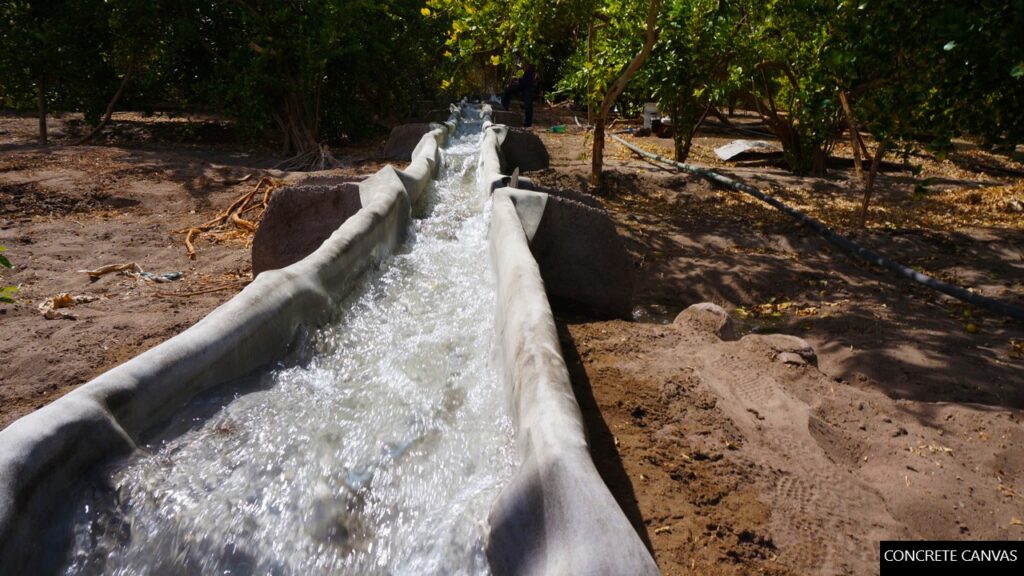
Further south in Vicuña, 2,647m² of CC5™ was installed over ten days to stop infiltration and improve a local water-management system. The channel still had to remain available for weekly irrigation throughout the work. Following the project, the community reported having 70% more water available than before.
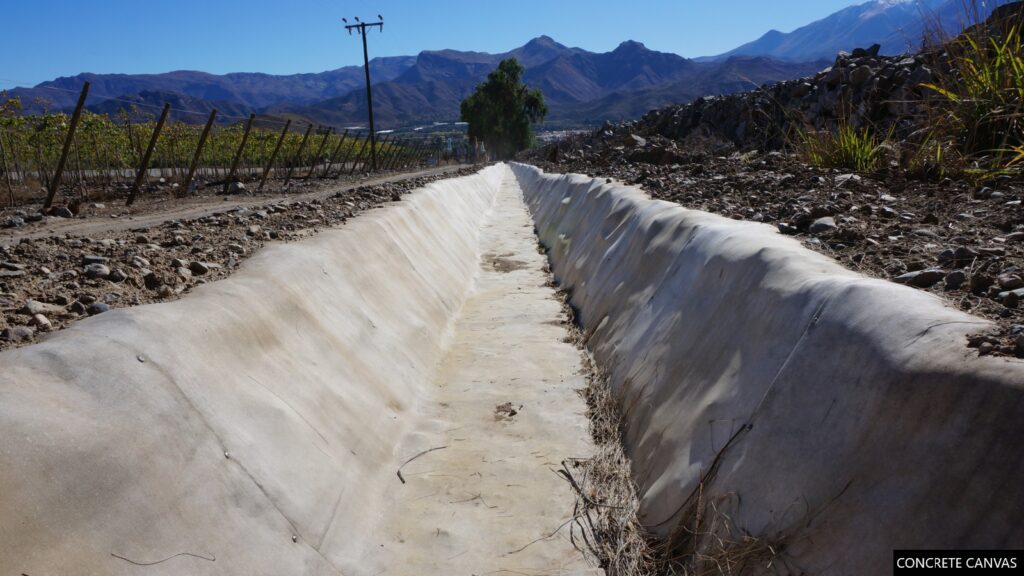
At Mooi River in South Africa, 10,600m² of CC5™ was used to remediate a failing irrigation canal. Minimising interruption to the water supply was one of the reasons the solution was selected.
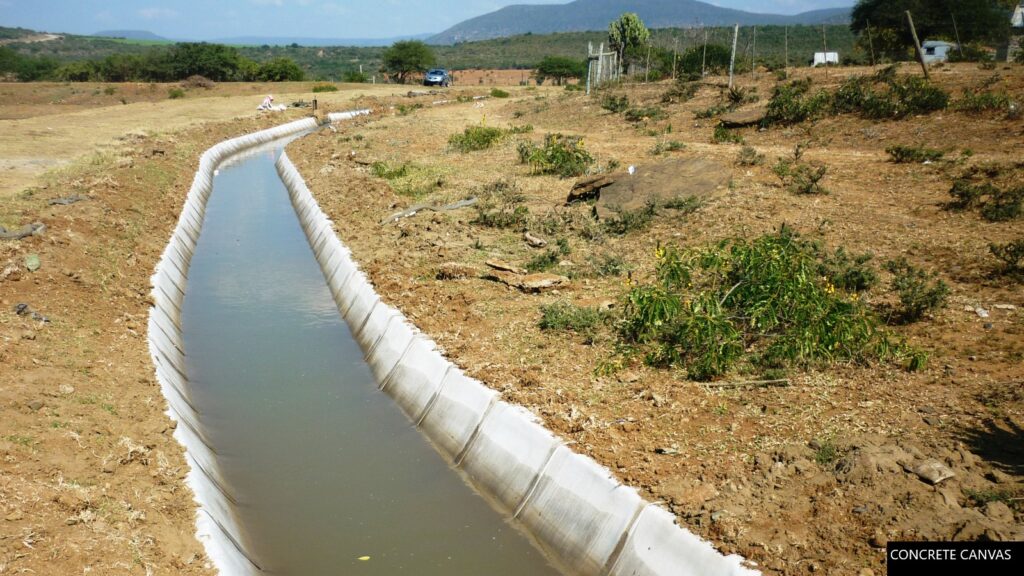
These projects differ in scale and location, but the underlying requirement is consistent: the lining method must fit around the operation of the asset, not the other way around.

Designing for a shorter maintenance window
GCCMs are supplied in rolls and can be cut, secured, jointed and hydrated on site. Once set, they form a thin, durable concrete layer. Their installation can use smaller crews and less heavy plant than many conventional concrete methods, which can be particularly useful on narrow canal banks or remote sections of a network.
Speed, however, should not be treated as a shortcut. A successful installation still depends on appropriate preparation, secure joints, correct anchoring and full hydration. Planning the work around these requirements is what allows a shorter programme to deliver a long-term result.
The best time to consider those details is before the canal is empty and the maintenance clock has started. Early technical discussion can help establish whether the existing profile can be retained, what preparation is required and how crews and materials will move through the site.
Keeping water moving
For many irrigation teams, the most valuable lining is not simply the one that controls seepage. It is the one that can be installed within the available window, returned to service quickly and maintained without repeatedly disrupting the people who depend on the network.
That makes continuity of supply a design criterion in its own right. When programme, access and installation method are considered from the outset, canal rehabilitation becomes easier to plan around the reality of irrigation operations.
Be the first to comment